

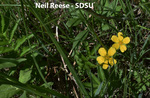
Rosaceae: Argentina anserina
Files
Family Name
Rosaceae
Common Name
: Silverweed, Silverweed Cinquefoil
Native American Name
Lakota: zuyá pȟežúta
Description
Argentina anserina is a perennial herb with a spreading, mat-forming habit, growing from a fibrous root system with thickened edible storage roots and reproducing vigorously by long, red, above-ground stolons that root at the nodes. Its stems are prostrate and simple, with flowering scapes rising 10–30 cm above the basal rosette. The plant is covered in fine, silky, silvery hairs, especially on the underside of the leaves. Leaves are alternate, pinnately compound with 7 to 15 oblong to lanceolate leaflets covered with dense, silvery hairs on the underside, giving a characteristic silvery appearance. Leaflets are deeply toothed, measure about 1 to 4 centimeters long and 0.5 to 1.5 centimeters wide, with petioles 3 to 7 centimeters long. Flowering occurs from late spring through summer, with solitary, bright yellow, saucer-shaped flowers (1.5–2.5 cm across) borne singly on leafless stalks. Each flower has five bright yellow petals approximately 8 to 15 millimeters long and 5 to 10 millimeters wide, and five green sepals about 5 to 8 millimeters long with pointed tips. Numerous stamens (around 20 to 30) encircle a superior ovary of multiple carpels fused at the base. The pistil consists of several distinct styles, each terminating in a stigma. Fruits develop as small, dry achenes aggregated on a conical receptacle, maturing in late summer. Silverweed is native to South Dakota, found statewide in moist meadows, streambanks, marshes, ditches, and sometimes sandy or disturbed soils, especially in moist lowland habitats.
Synonym: Potentilla anserina
Horticulture Notes
Seed Collection: Collect seeds in late summer when the fruits are dry and brown; seeds are small and easily separated by rubbing the fruit clusters.
Germination: Sow seeds in fall or after 30–60 days of cold-moist stratification in spring; germinate best in moist, cool conditions.
Vegetative Propagation: Readily propagated by planting rooted runners (stolons).
Soils: Prefers moist, rich loams but tolerates clay, sand, and gravel; mildly acid to mildly alkaline soils. Light: Full sun to partial shade.
Water: Requires consistently moist soil; tolerates flooding but not drought; best with regular watering.
Additional Notes
Silverweed roots are edible raw, roasted, or boiled, tasting like parsnip or sweet potato, and were an important food for Indigenous peoples; Dakota/Lakota used the roots for yellow dye. The plant is astringent and anti-inflammatory, with teas and washes from the leaves used for sore throats, inflammation, diarrhea, and wounds, and leaves were placed in shoes to absorb sweat