

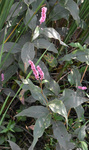
Polygonaceae: Polygonum amphibium
Files
Family Name
Polygonaceae
Common Name
Amphibious bistort, water smartweed
Native American Name
Lakota: táku šašála, pšitȟóla hú iyéčheča
Description
Polygonum amphibium is a perennial aquatic or semi-aquatic herb growing from a rhizomatous root system that allows it to spread horizontally underwater or in saturated soils. The roots are fibrous and fleshy, anchoring the plant in mud or shallow water. Stems can be either emergent or floating, reaching 30 to 90 cm in height. Leaves are alternate and variable: submerged leaves are narrow and linear, 5–15 cm long and 0.5–1 cm wide; floating or terrestrial leaves are broader, ovate to lanceolate, 7–20 cm long and 3–10 cm wide, with entire margins and petioles 2–8 cm long. The flowers are small, pink to rose-colored, clustered in dense terminal spikes blooming from July through September. Each flower has five pink to rose-colored tepals (sepals and petals not distinctly separate), 3 to 5 mm long and 1.5 to 2 mm wide. The flower contains eight stamens with yellow anthers. The pistil has a superior ovary with three styles. Fruits develop from August through October, maturing into small, three-angled achenes about 2 to 3 mm long and 1.5 to 2 mm wide. Water smartweed is native to South Dakota and typically found in wetlands, along lake and pond margins, slow-moving streams, and marshy areas throughout the eastern and central parts of the state.
Synonym: Persicaria amphibia
Horticulture Notes
Seed Collection: Collect mature achenes in late summer to early fall after they dry.
Germination: Seeds germinate well in moist or wet soil or shallow water; no special treatment typically needed.
Vegetative Propagation: Can spread by rhizome division.
Soils: Prefers saturated soils or shallow water substrates.
Light: Full sun to partial shade.
Water: Requires wet or aquatic conditions.
Additional Notes
Water smartweed provides important habitat and food for aquatic wildlife, including waterfowl. It can help stabilize soils in wetland areas and is sometimes used in wetland restoration projects.