

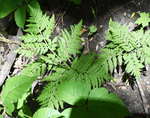
Apiaceae: Torilis japonica
Files
Family Name
Apiaceae
Common Name
Japanese hedge parsley
Description
Torilis japonica is a biennial or annual, herbaceous plant with a fibrous root system. Mature plants typically reach 50–120 cm in height. Stems are erect, branched, slender, round, and sparsely hairy to nearly glabrous, with lower stems often tinged purple. Leaves are alternate, compound, and 2–3 pinnate (divided two or three times), with ultimate segments linear to lanceolate, 1–3 cm long and 1–3 mm wide, with sharply toothed or lobed margins; upper surfaces are medium green and sparsely hairy, lower surfaces are paler and may be finely hairy. Petioles are present, 2–6 cm long for basal and lower stem leaves; upper leaves are smaller and may be sessile. Flowering occurs from June to August, with inflorescences forming many small, flat-topped umbels, 2–5 cm across, each composed of 2–8 primary rays and numerous small, white, five-petaled flowers. The calyx is reduced to five minute teeth. Petals are five, white, obovate to notched at the tip, about 1 mm long, free and spreading. Flowers are functionally unisexual or bisexual, with both disc and marginal florets similar in appearance. Each flower has five stamens with white filaments and purple anthers about 0.5–1 mm long, and a single pistil with an inferior, two-celled ovary, two short styles, and capitate stigmas. The fruit is a small, ovoid schizocarp (mericarp), 2–3 mm long, covered with hooked bristles, green turning brown as it matures, and typically produced from July to September. Japanese hedge parsley is introduced in South Dakota, native to Eurasia, and found in disturbed habitats including roadsides, woodland edges, fields, and waste areas, especially in moist, well-drained soils and partial shade to full sun.
Additional Notes
Japanese hedge parsley is not valued horticulturally due to its aggressive, invasive habit, rapid spread, and ability to outcompete native vegetation. Ecologically, it has limited value, though it may provide some nectar and pollen for generalist insects; its dense growth can alter native plant communities and reduce biodiversity. The hooked fruits can attach to animal fur, clothing, or equipment, aiding its spread.